Dealing with disappointment and rejection (a writers guide)

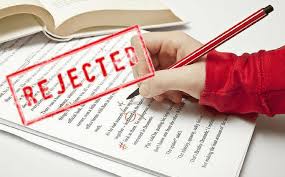
The dreaded rejection stamp (see above)

Most aspiring writers are all too familiar with the feeling of a manuscript, poem or other piece of literature being dismissed by a publisher or company. A few days ago, I too felt this feeling, when I was told the news that my poem “My Pen” would not be shortlisted for the Red Room Poetry Competition.

To make matters worse, my whole school classroom was informed of my shortcomings via my well-meaning but perhaps overly-ambitious English teacher, who told my class to vote for my poem in the “People’s Choice” category of the competition, before realising my name wasn’t on the list.

At first, I was none too pleased by this turn of events. However, after mulling it over, I realised it didn’t really matter that I had missed out. I had still been asked by my school to submit that piece of poetry on the website, which is already flattering recognition. I had been encouraged by my family and peers through the process, and I had been earnestly told that my poem was of good quality and fun to read. The people who read my poem said they really enjoyed it, and, for me, that was enough.

After realising this, I felt a heavy weight lift from my shoulders. After all, isn’t the point of books, poems and articles to inform and entertain? I figured that I had entertained all who had taken the time to read that poem, so wasn’t my poem successful? I believe my hard-work indeed paid-off, just not in the way I originally expected.

And so, if you have recently submitted a work to a company, competition or wherever else, and have been rejected, think of this. “Have I entertained someone with this work?”. If the answer is yes, then you’re already more “successful” than you could ever imagine.
Writing Poetry and Saving the Planet

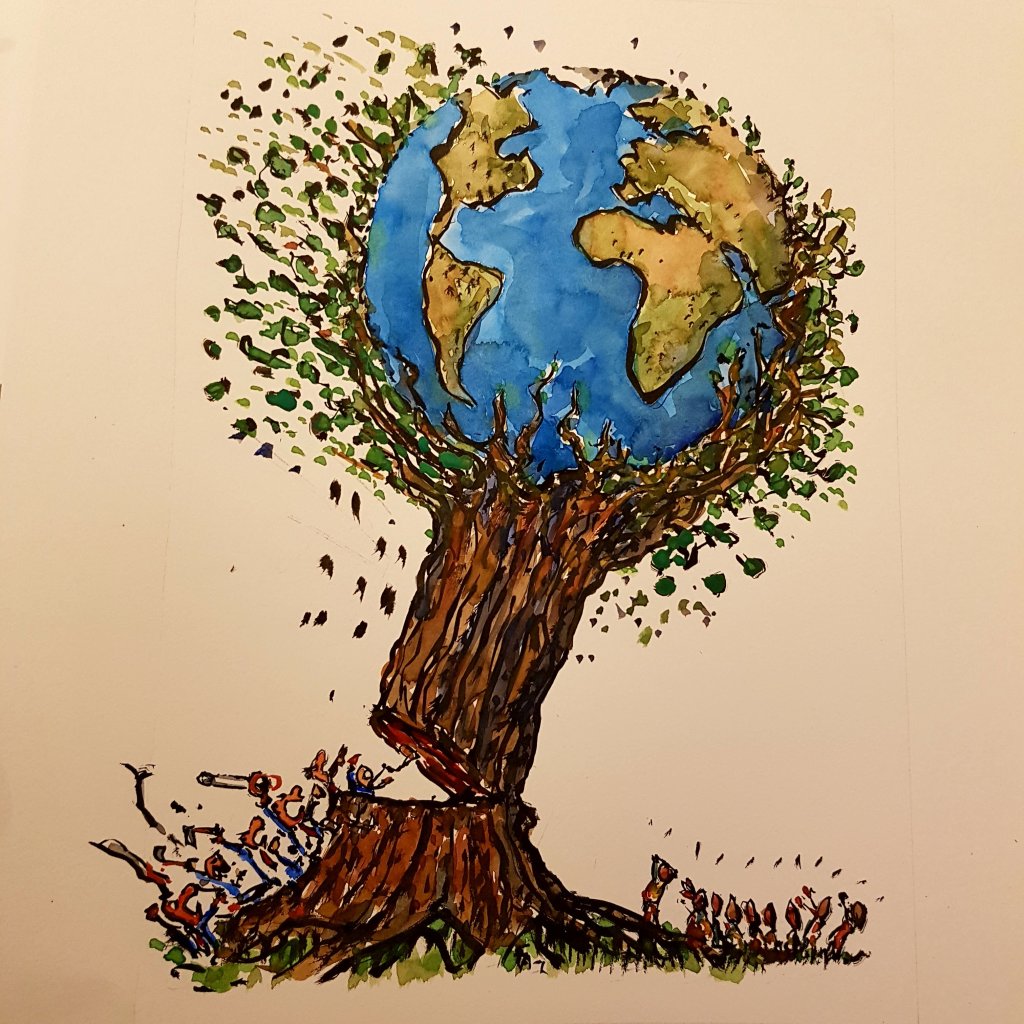
This drawing has it all: detail, beauty, and a deeper meaning. (Credit goes to Frits Ahlefeldt from https://fritsahlefeldt.com/2018/02/17/logbook-15-feb-illegal-logging-drawing/)

We’ve all heard the recent news stories about the endangered and resource-exhausted place that us humans call home. No matter what side of the coin you’re on, it’s hard to deny the statistics that show the global temperature soaring, biodiversity lessening and number of species diminishing. One current and highly debated environmental issue is that of the recent illegal forest fires in the Amazon rainforest. Many claim that this event is a turn for the worse, as it’s essentially destroying the “lungs” of our planet, while others argue that these fires inadvertently improve the global economy, while offering jobs for the local community. Whilst I tend to support the views of the former, I can also see how some people would greatly benefit from the latter. So to put these events into perspective, and get clarity about the situation at hand, I turn to poetry.

By reading Small Tree by Marné Prinsloo, I see the action of deforestation in a way I hadn’t thought about before. Small Tree personifies a tree and grants it the power of narration. Seeing the world through the trees eyes, I understand that by killing a single tree, we are killing a vital part of our Earth, a part that demands care and respect just like a human being. Reading “On Deforestation” by Bharti Chandwani grants me another outlook on the importance of a tree, as it lists all the gifts a tree can provide its surrounding environment. After reading these poems, my outlook on deforestation is formed, and I decide to write a poem of my own focussing on the future of the Amazon Rainforest, and in turn, the world.

My poem, called “What Could Have Been”, is a fictional outlook on the world after the Amazon Rainforest is destroyed. “What Could Have Been” summarises all the misdeeds done by man to forests, and serves as a warning to loggers and corporations. In saying this, I am not implying that logging should stop completely, as I also understand the importance of a job and income. At the very least, however, a ban on logging in ancient rainforests such as the Amazon would serve a remarkable purpose. If even one person reads my poem and is inspired to make a change, it will have been worth it.

Below is a PDF copy of my poem. Please view the following links for each poem and the source I viewed them from. Thanks!

My personal favourite books ever! (and other stuff)

My last two posts have been about poetry, but as this is my proper (first-person) blog, I figured it might be time to shake things up a bit by telling you a bit more about myself (and my love of books). I grew up in Queensland, Australia, and was introduced into the world of novel reading through a Paul Jennings series of short stories. (I think it was Unmentionable, but don’t quote me…) I fell in love with the books straight away, and preceded to read every single book Paul had written (excluding his early novels, but who read them anyway?) Soon, I had gnawed my way through all his books like a hungry vermin, but my appetite for literature had not been satisfied. It was around then that I discovered Harry Potter.

I read the first Harry Potter book when I was 9 years old, and was immediately entranced. The way it took my mind to another place, another world, was magical to me (pun intended!), and something that very few books I have read to this day could recreate. I chomped through the first three in a matter of months (I was 9 years old, so cut me some slack!), but was then halted on my quest of discovery. My annoying, no good parents (as I saw them at the time) decided I was not old enough to finish the series! Despite my immediate disappointment at this turn of events, I reckon it probably turned out for the best. For it was then that I truly branched out, as I sought to find books I was allowed to read. In that time, I read every genre there was, and I’ve learned to love them all in their own ways (excluding romance novels, because a cheap plot, cheesy dialogue and forgettable characters is EXACTLY what you want from a book!) Before long, I had read hundreds of books, and I learned to love them just as much as Harry Potter and Paul Jennings before it. For younger readers, some book recommendations I can give you include “Deltora Quest”, “Harry Potter” (obviously), “Diary of a Wimpy Kid”, “Middle School” and, debatably, the “Cherub” series.

By the time I was old enough to read the remaining Potter books, I had nearly forgotten they existed. However, when I was given them for my birthday a year or so later, I was once again absorbed in J.K Rowling’s world of magic. Boy, were they good! As I’ve grown older, I’ve read more and more books that I could happily recommend for young adults/adults. Some of my favourite authors include Lynette Noni, Stephen King, and Agatha Christie, all of whom typically write different genres, but all share one important trait. Each of these talented human beings can take their reader to a different place, and they allow readers to forget about their busy life, even if only for a few minutes. And that, in my opinion, is something we all deserve.

P.S Thanks for reading my third blog on this website. If you enjoyed the article and would like to be notified when I release new blogs, just visit my home page and subscribe. Too easy! Also, if you think I got something wrong, feel free to comment below this post. Thanks!

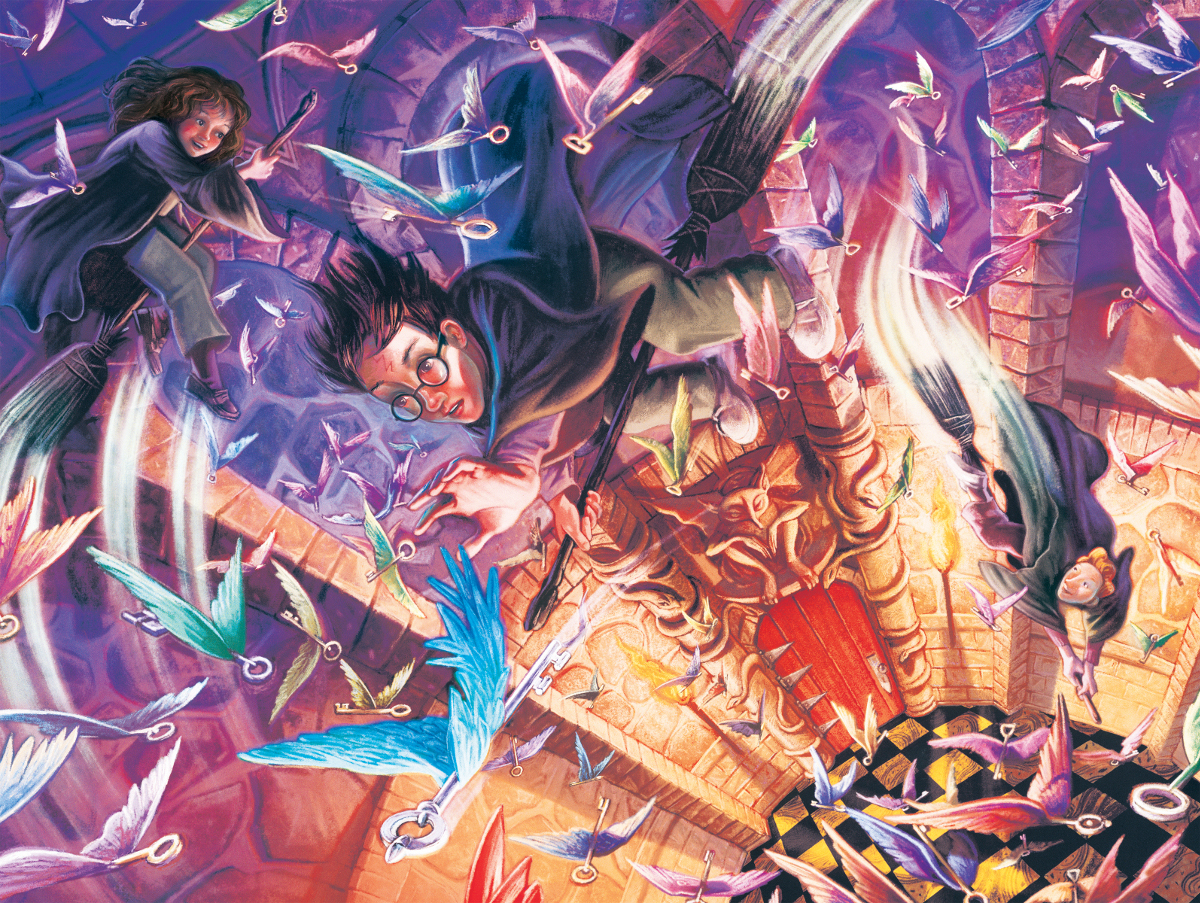
Image credits go to Mary GrandPré, from https://www.puzzlewarehouse.com/Flying-Keys-Harry-Potter-hp1363.html

Are you an extrovert? If so, poetry slam may be for you

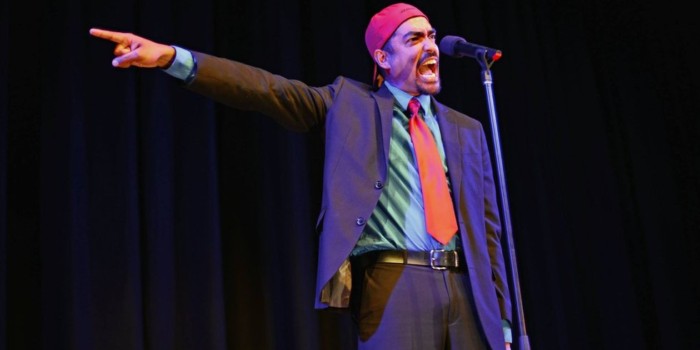
“He said he promised with a smile so honest he could convince Obama, the ballers, Iguodala, and even the Dalai Lama. Even apparently my momma. He promised that he would never harm her…” These are the words poetry slam contestant Eric Tinajero spits as he recounts his childhood life. His words captivate the audience, and he is later awarded 1st place for the event.

Did Eric’s words remind you of lyrics in a rap song? They should. You see, poetry slam is a competitive form of poetry, where aspiring poets take to the stage and recite a quick, precise poem in an attempt to win over the audience. Poets are only given 2-3 minutes to perform, so many poets speak quickly in order to fit their poem into the time slot. These poets are then judged by random members of the audience. This is to emphasise the emotion the audience feels after each performance. The lucky poet that receives the highest score wins a small, typically silly prize.

However, not all people can flourish in a slam environment. Poetry slam contestants are generally confident, social people, people that can take heat in highly pressurised situations. Poetry slams are described as “loud” and “aggressive”, with many audience members actively booing contestants they find uninteresting. However, if giving people a piece of your mind is your thing, and you’re not daunted at the prospect of others trying to bring you down, then poetry slam might be right for you.

Quotation credits go to http://www.aspenwords.org/winning-poems-4th-annual-youth-poetry-slam/

Poems are the key to unlocking our past

Poems, historians say, tell people a lot more about past events in history than word-of-mouth or written dialogue ever will. This is because, as spoken by author Bijal A Shah, “writing poetry requires the poet to be extremely disciplined with his choice of words and the number of words, to create a sharp and accurate snapshot of what he or she is feeling”. Through the power of poetry, people can “feel” the authors emotion and understand exactly what they were going through at the time of writing.

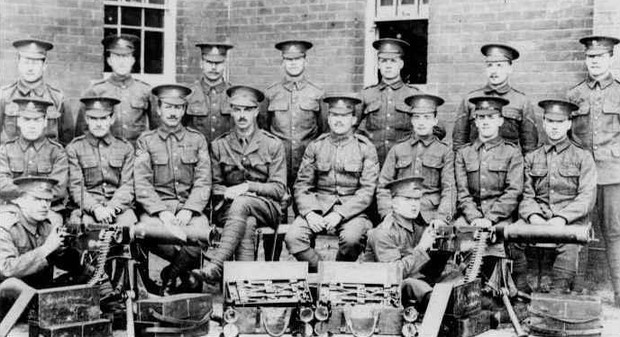
Take WW1 for example. During the time, many young men from around the globe enlisted for their countries army, believing it would be an “adventure” and a “chance to explore the world”. It was only when poems and other forms of literature written by soldiers were sent back to their homeland that people realised the horror and trauma that the soldiers endured. Without these pieces of information, many people today would still struggle to understand the enormity of the war.

Reading poetry can also show another side of a story. For example, “The Stolen Generation” by David Keig highlights the suffering and pain the native Australian Indigenous populous experienced between 1910-1970. These poems written by Indigenous peoples, as well as other forms of writing, would almost certainly have contributed to the relinquishment of the system in 1970, and the later apology from Kevin Rudd in 2008. Poetry by the Indigenous Australians have given white Australians an insight into their turmoiled past.

So why do we humans turn to poetry when we experience a large event in our lives? Perhaps, as Bijal A Shah suggests, poetry is a form of therapy. Bijal even goes as far to say that “poetry helped me enormously during difficult transitions in my life.” Whatever the case, poetry seems to hold a highly descriptive and sometimes emotional power that few other forms of literature possess. Poetry is the key to unlocking humanity’s hidden, and mysterious, past.

Credit for quotes and statistics goes to Bijal A Shah from https://medium.com/@bijalashah/why-poetry-is-one-of-the-most-powerful-forms-of-therapy-f3553cb909b4

Design a site like this with WordPress.com
Get started